Bunker Decisions: How a B30 Biodiesel Blend Eliminated a €32,000 FuelEU Penalty

A single biofuel bunker, applied in the final weeks of the 2025 FuelEU reporting year, transformed a €32,128 penalty into a compliance surplus — without touching the vessel's primary fuel strategy. This is a documented outcome from a real vessel operating in EU waters under Regulation (EU) 2023/1805, based on verified compliance data. The vessel's identity is withheld; the numbers are not.
The compliance position before biofuel
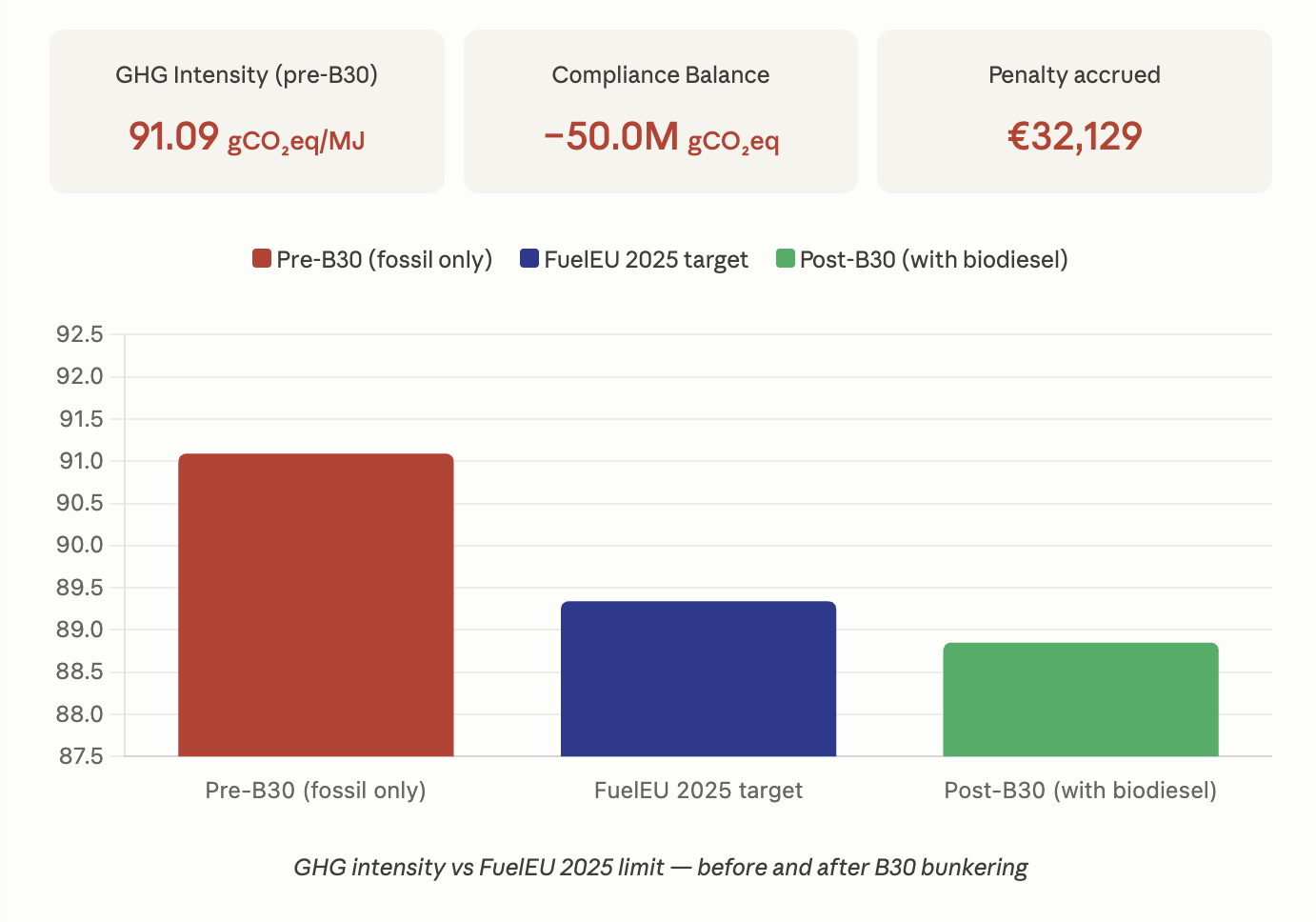
The vessel commenced EU-scope trading on 17 March 2025, running exclusively on HFO and MGO — the default fossil fuel mix for conventionally fuelled tonnage. Under Regulation (EU) 2023/1805 (FuelEU Maritime), the 2025 GHG intensity limit is 89.34 gCO₂eq/MJ — a 2% reduction from the 2020 MRV baseline of 91.16 gCO₂eq/MJ. By 4 November 2025, after approximately seven and a half months of operation on fossil fuels alone, the vessel's position was:
- GHG Intensity: 91.09 gCO₂eq/MJ — above the 89.34 target
- Compliance Balance: −49,996,264 gCO₂eq (a deficit of approximately 50 million gCO₂eq)
- Projected FuelEU Penalty: €32,128.67
The path of least resistance was clear: absorb the penalty and move on. The question was whether it was correctable — with two months of the reporting year still remaining.
The intervention: 26.70 metric tonnes of B30 biodiesel
On 4 November 2025, the vessel bunkered B30 Biodiesel — a 30% blend with DMA-grade marine gasoil as the base fuel. Consumption from bunkering through to 31 December 2025 totalled just 26.70 metric tonnes of Bio Fuel :
- At EU Port: 2.07 MT
- Within EU voyages: 24.63 MT
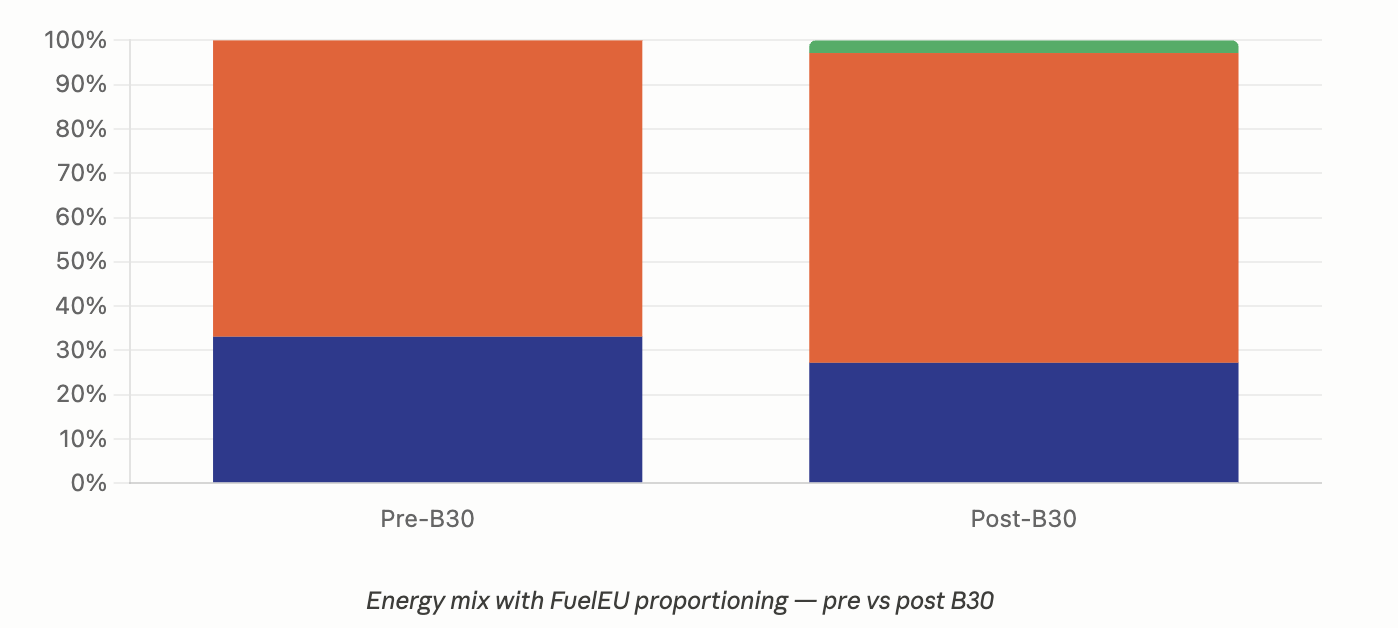
Measured against the vessel's total annual energy base, the B30 Bio diesel contributed 987,900 MJ — representing approximately 2.85% of total energy (34,676,207.50 MJ with FuelEU proportioning applied). This is not a large volume. The impact was disproportionate.
The outcome: from deficit to surplus
By 31 December 2025, the full-year compliance picture had shifted materially:
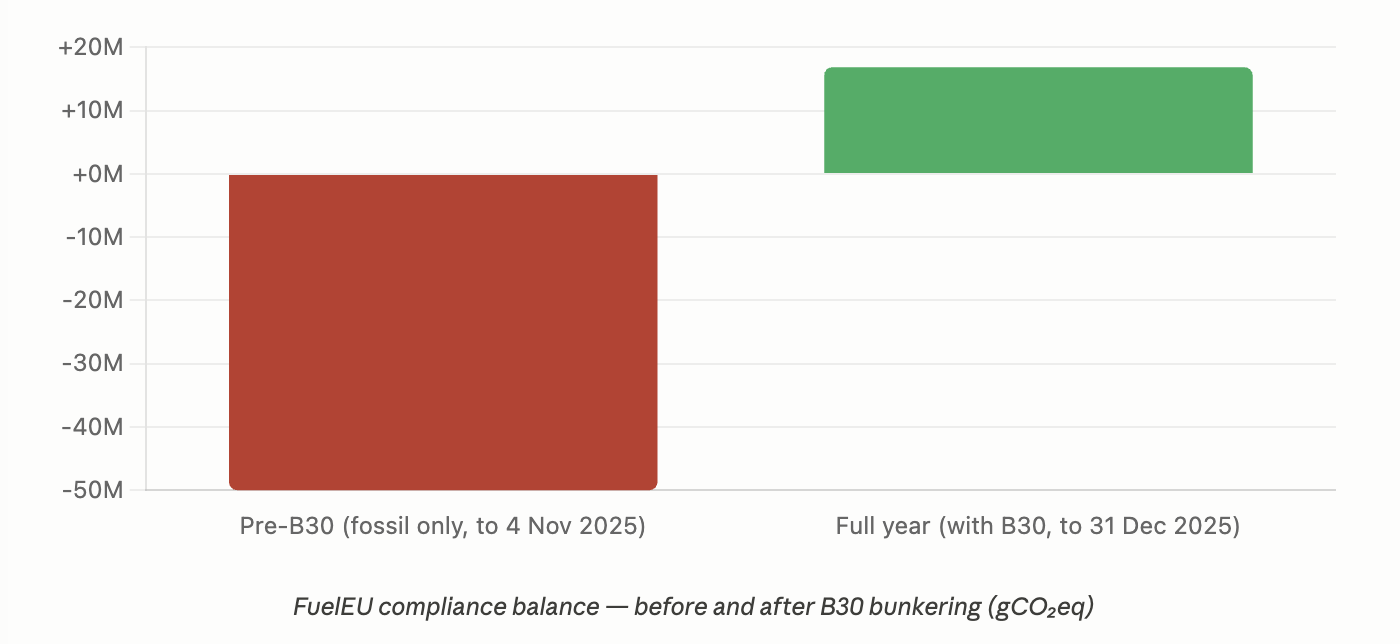
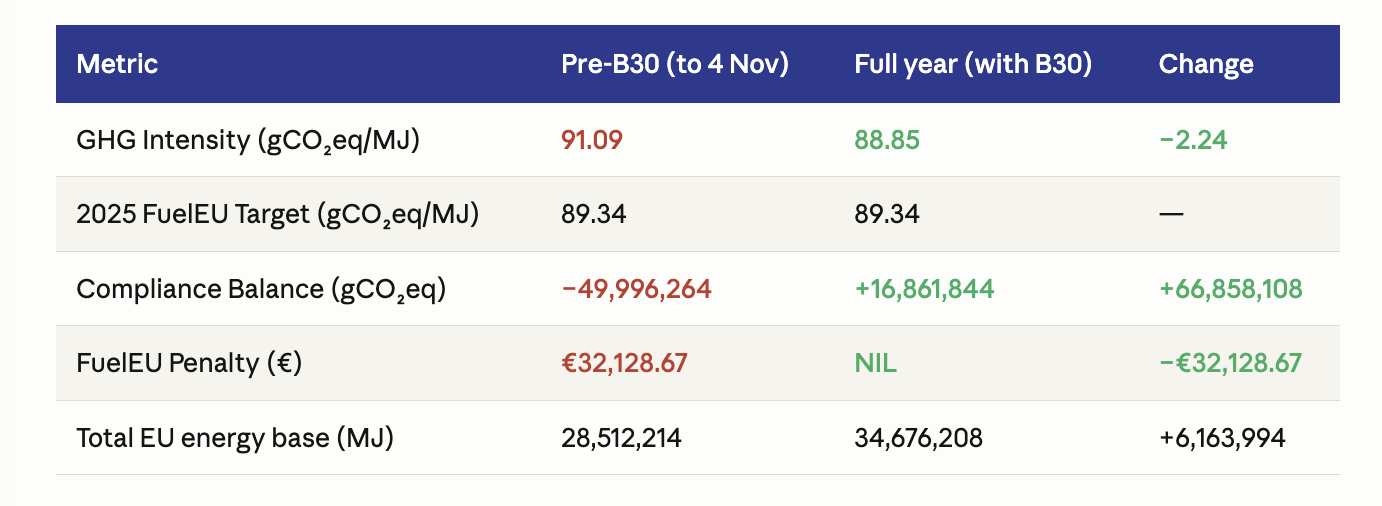
The GHG intensity dropped from 91.09 to 88.85 gCO₂eq/MJ, crossing the 89.34 target comfortably. The compliance balance swung from a deficit of nearly 50 million gCO₂eq to a surplus of approximately 16.9 million gCO₂eq. The penalty: eliminated.
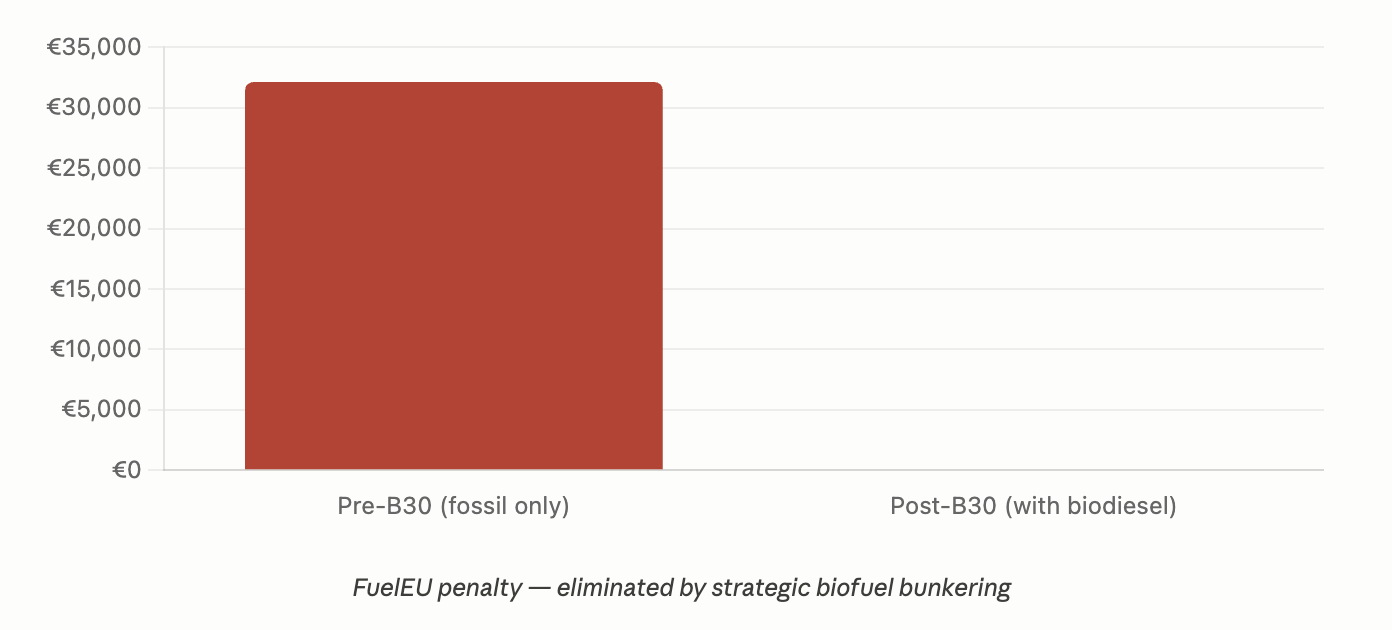
What matters beyond the quantum of the saving is the mechanism. A small volume of certified biodiesel, applied strategically in the final reporting window, absorbed the full year's fossil fuel non-compliance and generated a bankable surplus for 2026 under Article 25 of FuelEU Maritime.The penalty: eliminated by 2.85% of total energy.
Why B30 works: the FuelEU GHG intensity calculation
FuelEU Maritime calculates GHG intensity on a well-to-wake (WtW) basis under the methodology set out in Annex I of Regulation (EU) 2023/1805. For biodiesel blends compliant with Annex IX of the Renewable Energy Directive (RED II/RED III), the biogenic fraction is credited with significantly lower lifecycle GHG emissions than fossil gasoil.
B30 Biodiesel — at 30% FAME content — carries a materially lower WtW GHG intensity than pure fossil MGO. When 987,900 MJ of B30 energy enters the intensity calculation, the blended average is pulled below the 89.34 gCO₂eq/MJ target. The effect is amplified further by the FuelEU proportioning mechanism (Annex IV, Part A), which optimally allocates energy from mixed bunker stems across voyage categories. In this case, optimised proportioning shifted approximately 3.87 million MJ of energy from the HFO pool to the MGO/B30 pool — further compressing the effective GHG intensity.
The TECS view
At TECS, we have been tracking FuelEU compliance positions across multiple fleets since the regulation entered force on 1 January 2025. What this case study demonstrates is both encouraging and cautionary.
It is encouraging because a vessel operating on fossil fuels for most of the year is not necessarily lost. A modest, well-documented biofuel stem in the final trading window can reverse the position entirely.
It is cautionary because the intervention only worked here because the GHG intensity gap was manageable (91.09 against a target of 89.34 — a gap of just 1.75 gCO₂eq/MJ). A vessel operating materially above the target, or one with a larger EU voyage exposure, would require substantially more biodiesel volume to achieve the same swing. Waiting until November is not a strategy — it was a fortunate outcome in this case, which was the result of data driven decisions.
Suggested actions for shipowners and managers :
- Run your FuelEU compliance balance at least quarterly. Know where you stand against the 89.34 gCO₂eq/MJ target before Q3 is over.
- Integrate biofuel bunkering into your annual bunker strategy — not as a last resort but as a planned input with measurable GHG intensity credit.
- Ensure every biofuel delivery has full sustainability documentation before the vessel takes it on board, not after.
- If you generated a compliance surplus in 2025, bank it in the FuelEU Database before 30 April 2026 — the deadline has not passed at the time of writing.
- Review your charter party FuelEU clause — if it is not the BIMCO 2024 clause or equivalent, it may not adequately protect either party in a biofuel compliance scenario.
The 2026 reporting year is already accumulating GHG intensity data. Every voyage on fossil fuels is building a position that biofuel — or pooling, or banking from 2025 — will need to address. The earlier you know your number, the more options you have.
How TECS can help
TECS provides end-to-end FuelEU Maritime compliance support — from real-time GHG intensity monitoring and voyage-level compliance balance tracking, to biofuel documentation review and verifier-ready reporting. Our Fore-C platform gives fleet managers the in-period data needed to make informed bunkering decisions before a penalty becomes unavoidable. Contact us at dms@maritimetecs.com to discuss your fleet's FuelEU compliance position.